ChicagoSecondarySortDemonstrationProject.
An eight-week demonstration at four primary MRFs in the greater Chicago area. Titus's portable secondary MRF recovered 79% of residual material, outperforming our California, Pacific Northwest, and Northeast studies.
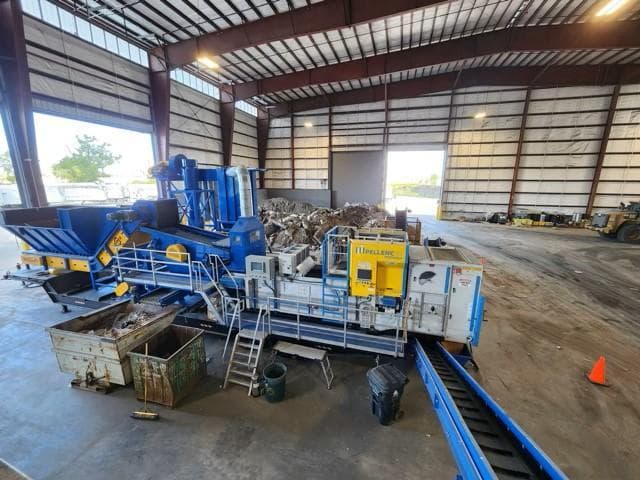
Titus portable secondary MRF. Feed hopper, vibratory screener, air classifier, high-speed conveyor, dual-eject NIR optical sorter.
Test the secondary-MRF business model in the Great Lakes region.
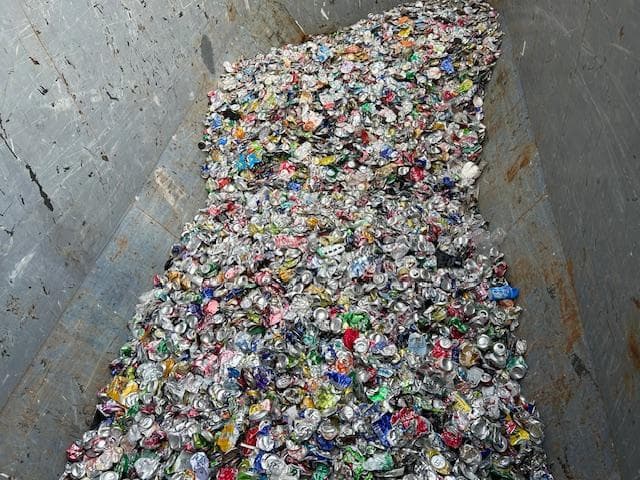
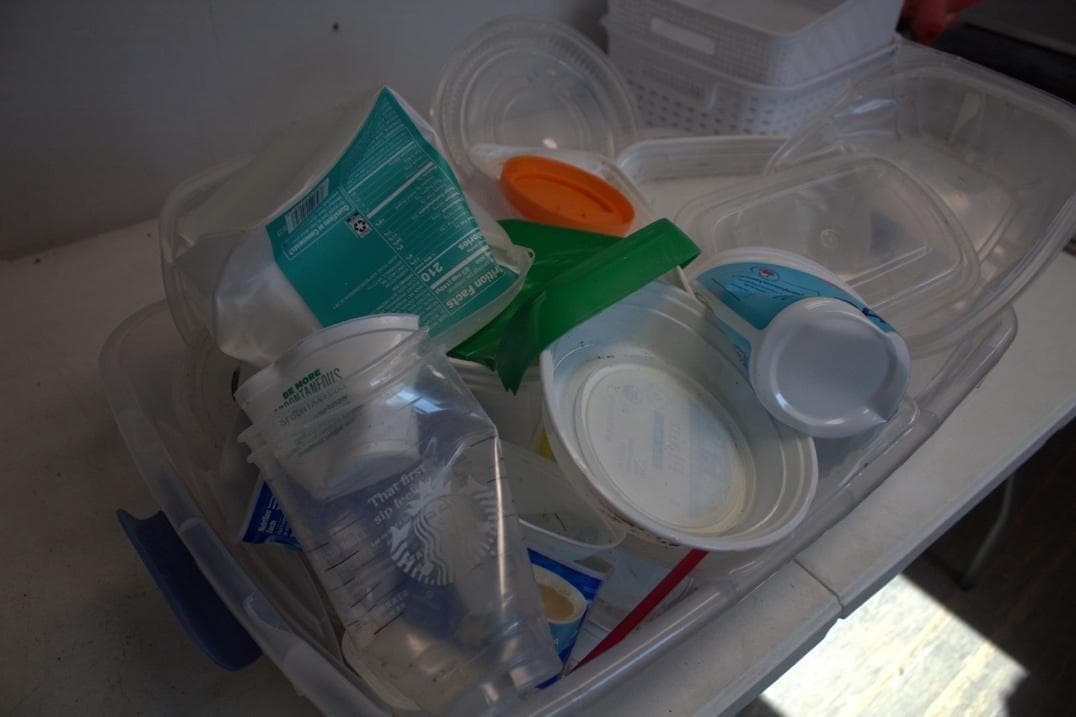
The Council of the Great Lakes Region Foundation partnered with Titus MRF Services, with funding from the Alliance to End Plastic Waste and The Recycling Partnership, to deploy Titus's portable secondary MRF to Chicago. The objective: demonstrate that extra value can be extracted from end-of-container-line residue, fiber-line post-sort contaminants, and mixed plastics that primary MRFs cannot economically sort today.
Over an eight-week period, samples were collected from four primary MRFs in the greater Chicago area, sized between 3,300 and 10,000 tons per month and operating at varying levels of automation. 119,120 pounds of residual material were processed through the portable unit.
This work builds on Titus's prior secondary-MRF feasibility studies for California, the Pacific Northwest, and the Northeast. The business model is protected by Titus patent US 8,813,972 B1.
Get the full case study as a PDF, free.
Enter your email and we’ll unlock the complete Chicago Secondary Sort Demonstration case study for your team, printable and shareable.
We’ll only use your email to send Titus insights. No spam, unsubscribe anytime.
Five-pass sortation on the portable unit.
The portable unit simulates the optical-sorting capabilities of a standard commercial-scale secondary MRF. To replicate a single-pass full-scale system, residual material was processed through the portable unit five times, with NIR ejection direction recalibrated for each commodity stream.
Metals were removed manually since the portable does not carry magnets or eddy-current separators. A full-scale secondary MRF would include both.
- 01Pass 1Polyethylene up, fiber down. Neutral mix carried forward; metals removed manually.
- 02Pass 2PET up (then non-clear PET removed by hand), PP down. Metals manual.
- 03Pass 3Aluminum up, polystyrene/EPS down (non-EPS/PVC removed).
- 04Pass 4Cartons up, PET color and PVC down.
- 05Pass 5Metals up, PET color / PVC down. Neutral residual collected for advanced-recycling analysis.
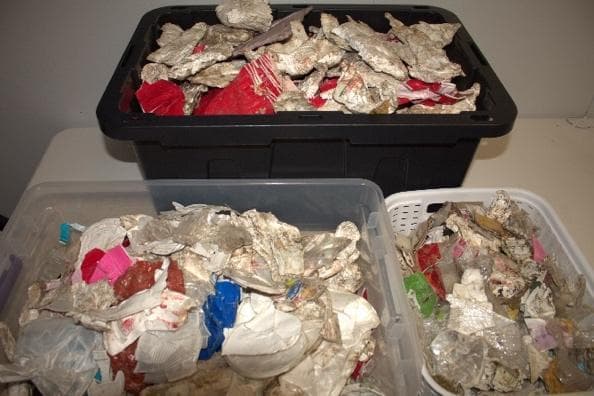
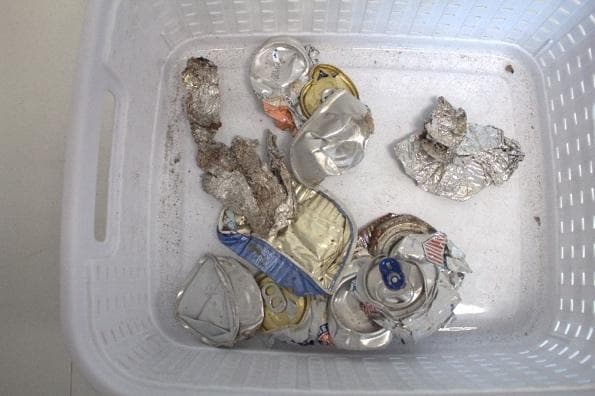
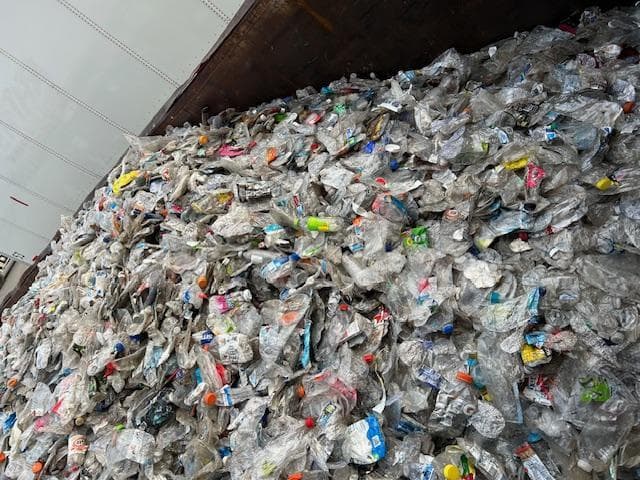
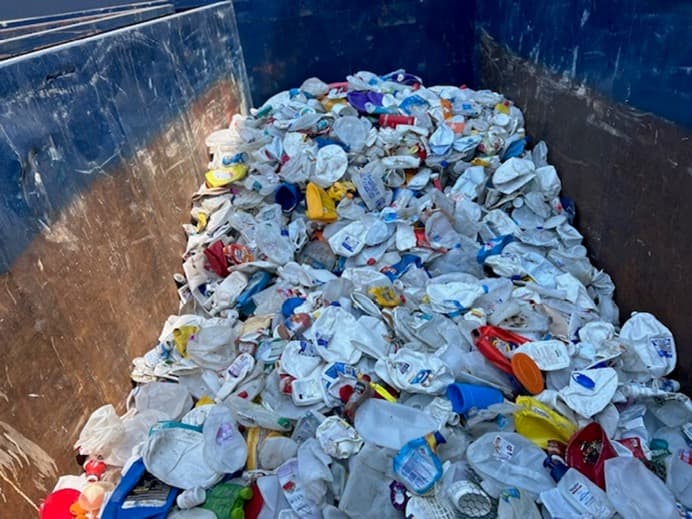
Eleven commodity streams, sorted to spec.
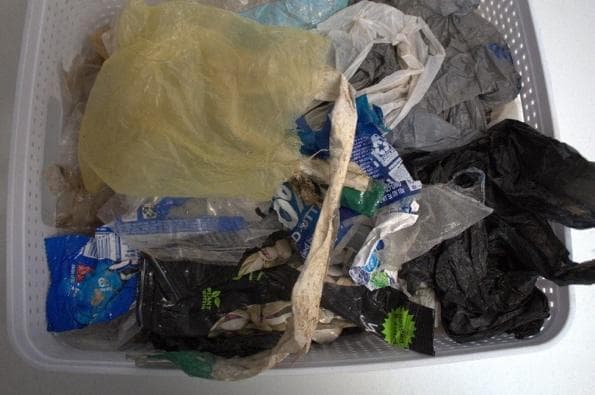
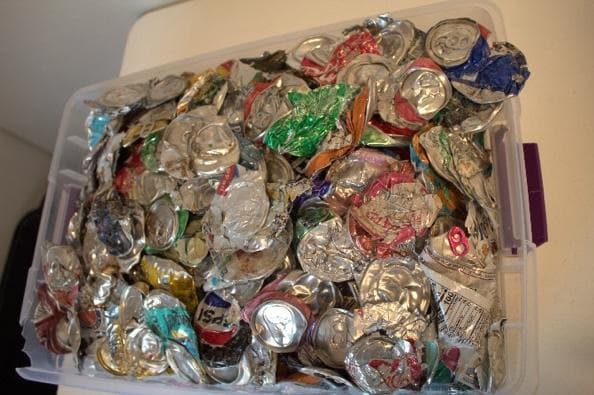
Material previously bound for landfill, sorted by the portable unit into market-ready commodities and chemical-recycling feedstock.
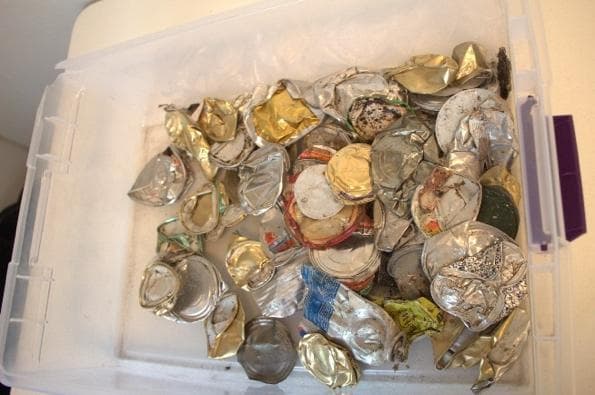
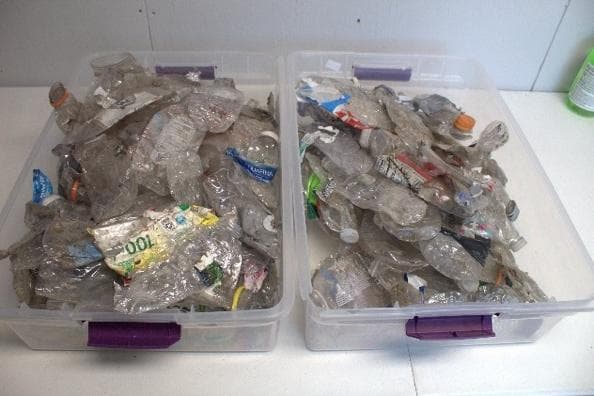
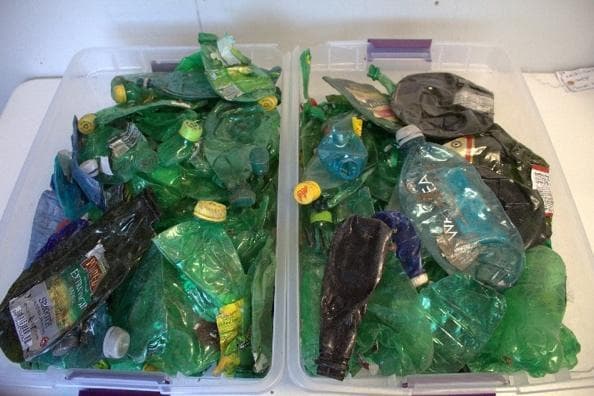
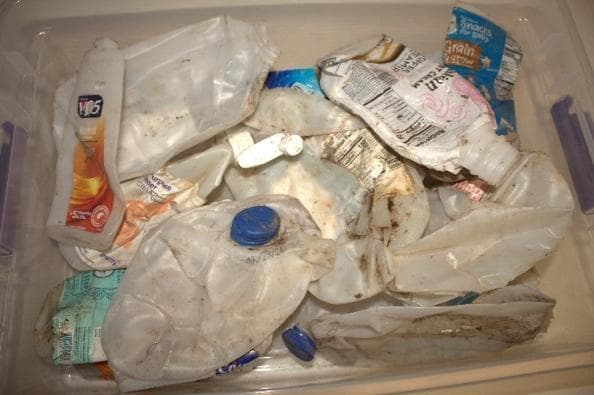
Chicago meaningfully outperformed prior regions.
The same portable system, methodology, and Titus team across four regional studies. Chicago's recovery rate was nearly 30 points above the prior regions.
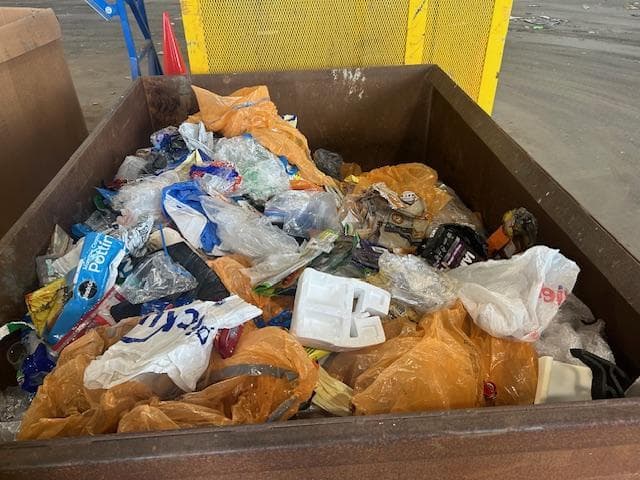
Two factors contributed to the higher Chicago recovery: more available advanced-recycling end markets for pass-through material (one participant forecasted use of up to 65% of the residual as feedstock) and unusually high film volume in the residual stream.
Lakeshore Recycling Services delivered the sorted material to greater-Chicago end markets.
The host facility delivered as much sorted material as possible to regional buyers, with the remainder shipped to emerging end markets outside the Great Lakes.
What a full-scale regional facility could deliver per year.
These figures are modeled from the demonstration, scaled to a hypothetical regional secondary MRF servicing greater Chicago, with inbound tonnage benchmarked against the SWALCO / SWANCC Recycling Market Study (December 2019). They describe projected impact, not current operations.
41% recovered for traditional commodity markets · 38% for advanced / chemical recycling end markets.
Higher-quality plastics through a brand-owner partnership.
Reynolds Consumer Products operates the Hefty ReNew™ orange-bag program. Residents in participating communities buy bags (~$10 for a 10-month supply) to collect hard-to-recycle plastics that aren't accepted in standard curbside bins.
The host MRF isolates the orange bags at presort and routes them to a secondary processor like Titus. Material arrives cleaner and higher quality than the same plastics placed loose in the recycling bin, proven by side-by-side comparison during the demonstration.
Average residential contribution: 1.9 pounds per orange bag. Participants pay roughly $1 / month for the enhanced service.
Who made the demonstration possible.
- Council of the Great Lakes RegionCommissioned the study
- Alliance to End Plastic Waste (AEPW)Funding partner
- The Recycling Partnership (TRP)Funding partner
- Lakeshore Recycling ServicesHost facility & project partner
Four sampled from eleven primary facilities.
Samples were drawn from four facilities varying in size, automation level, and sorting strategy. The full eleven-facility list for the greater Chicago region:
- Independent Recycling Systems (Chicago)
- Lakeshore Recycling Services (Exchange / Forest View / Northbrook)
- RSI Waste Management of Illinois (Chicago)
- Waste Management of Illinois (Hodgkins)
- Groot Industries (Plainfield / Elk Grove Village)
- Resource Management (Chicago Ridge)
- Republic Services (Melrose Park)
- Diversified Recycling (Homewood)
The methodology and equipment are protected by two Titus patents.
Get the full case study as a PDF, free.
Enter your email and we’ll unlock the complete Chicago Secondary Sort Demonstration case study for your team, printable and shareable.
We’ll only use your email to send Titus insights. No spam, unsubscribe anytime.
See how Titus can help you.
Tell us about your facility and what you are trying to improve. We will route you to the right team.
Call (909) 357-3156 or send us a message.